How to Balance Security, Luxury and Experience in Jewellery Showrooms
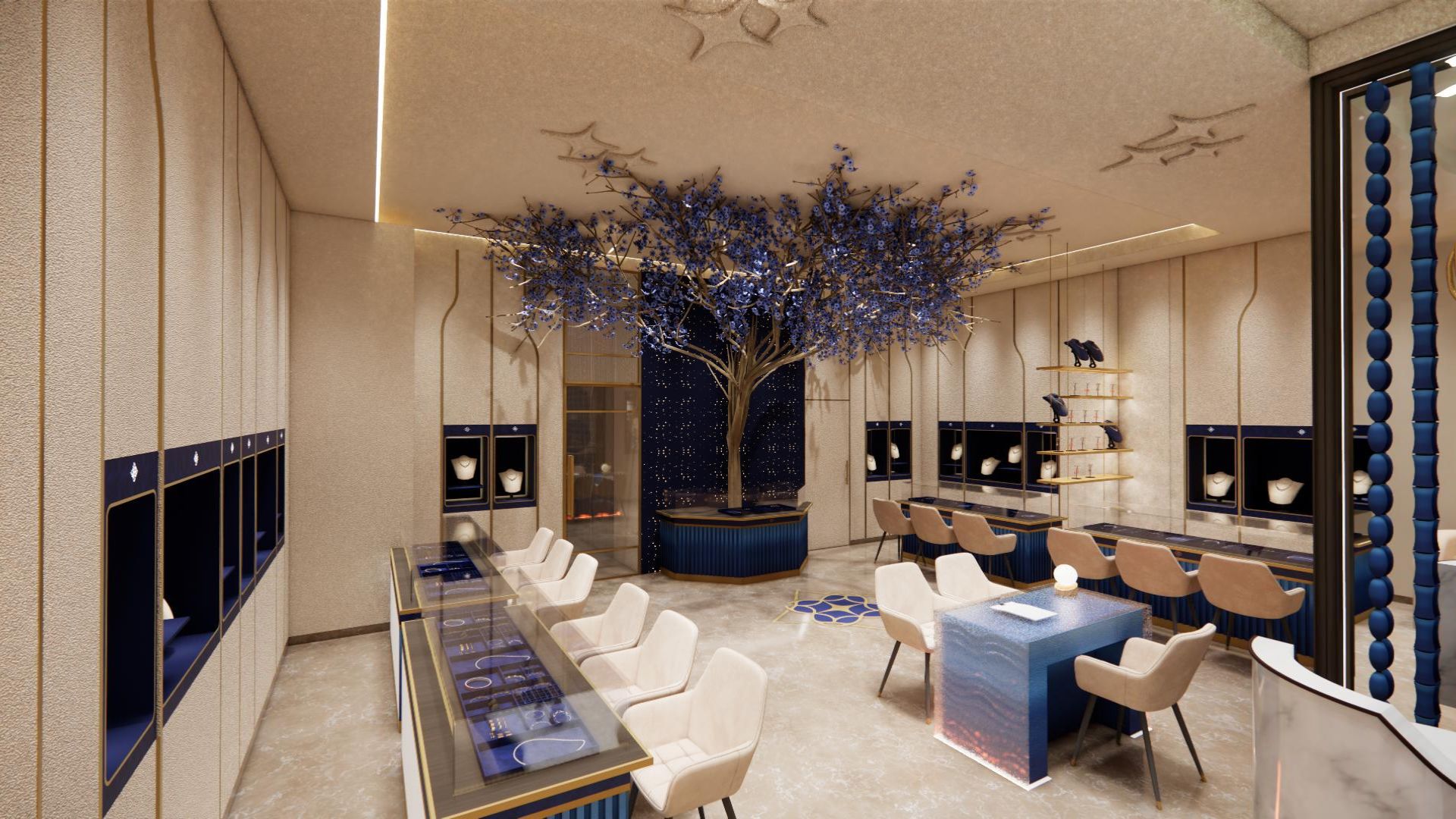
A jewellery showroom has to achieve something that few other retail spaces are expected to do. It must feel open enough to invite customers in, luxurious enough to reflect the value of the products and controlled enough to support security at every stage of the visit. That balance is central to effective jewellery showroom interior design. If any one element dominates too heavily, the experience can suffer.
The strongest showrooms do not treat luxury, security and customer comfort as separate design objectives. They bring them together within the same spatial strategy.
Start With Controlled Visibility, Not Visual Barriers
Security is essential in jewellery retail, but an overly defensive environment can make customers uncomfortable before a conversation even begins.
The objective is not to make security disappear. It is to integrate it intelligently into the layout.
Sightlines should allow staff to understand what is happening across important customer areas without making visitors feel constantly observed. Display positions, consultation zones and circulation routes can all contribute to this.
Useful planning considerations include:
- Clear visibility across key display areas
- Defined staff and customer circulation
- Controlled access to sensitive zones
- Logical placement of counters and showcases
- Avoiding unnecessary blind spots
- Keeping service areas organised and separate where required
When these decisions are addressed during planning, security can become part of the architecture rather than something added awkwardly later.
Luxury Comes From Restraint as Much as Decoration
A premium showroom does not necessarily need to be visually extravagant.
In jewellery retail, the products already carry substantial visual detail. The interior should support them rather than compete for attention.
This is where jewellery showroom interior design benefits from controlled material choices, proportion and lighting. Premium finishes can establish the right atmosphere, but too many reflective surfaces, patterns or decorative elements may dilute the presentation of the jewellery itself.
Luxury is often communicated more effectively through:
- Precise detailing
- Well-finished joinery
- Consistent material combinations
- Carefully proportioned furniture
- Comfortable seating
- Refined lighting
- Clean transitions between different zones
The result should feel considered rather than overloaded.
For brands looking at detailed approaches to premium jewellery environments, luxury jewellery store interiors layout and lighting plays an important role in understanding how space planning and visual presentation work together.
Design the Customer Journey Before Designing the Displays
Customers rarely experience a jewellery showroom as one continuous open space.
They move through several stages.
There may be an initial browsing period, followed by interaction with staff, closer product viewing, seating for detailed consideration and, potentially, a more private consultation.
Designing around that sequence can make the showroom feel more intuitive.
The entrance should communicate the character of the brand quickly without creating congestion. Displays near the beginning can encourage exploration, while deeper zones may be better suited to longer conversations and higher-involvement purchases.
Not every visitor requires the same degree of assistance either. Some prefer to browse independently at first, while others expect immediate attention. The space needs to accommodate both behaviours without creating confusion.
Display Design Has to Support Both Product and People
Jewellery showcases are not simply storage units with glass surfaces. They influence visibility, customer posture, staff interaction and the overall rhythm of the showroom.
Height, depth, lighting and placement all matter.
If counters are too visually heavy, the room can feel restricted. If displays are too sparse, valuable retail space may be underused. If seating is positioned poorly, consultation may interrupt circulation.
A considered display strategy should make it easy for customers to see products while still allowing staff to present, retrieve and discuss items comfortably.
This is one reason custom fixtures can play an important role in jewellery showroom interior design. Purpose-built counters, cabinetry and display elements can respond more closely to the dimensions, brand language and operational requirements of an individual showroom.
Brands looking to create a complete retail experience can also explore how high-end jewellery showroom design layout and lighting approaches display planning, customer movement and product visibility.
Lighting Needs Precision
Few retail categories depend on lighting as much as jewellery.
The wrong lighting can flatten the appearance of products, create uncomfortable glare or make the overall environment feel either too harsh or too dim.
A jewellery showroom generally benefits from a layered approach.
Ambient lighting establishes the overall environment, while focused display lighting directs attention towards merchandise. Consultation areas may require a slightly different balance so customers can view pieces comfortably at close range.
The placement of reflective finishes also needs consideration because jewellery, glass and polished materials can generate multiple reflections within the same field of view.
The goal is clarity and emphasis, not brightness for its own sake.
Privacy Should Be Planned, Not Improvised
Some jewellery purchases involve longer conversations, family discussions or higher-value decisions. Customers may appreciate spaces that feel more private than the primary retail floor.
That does not mean every showroom needs completely enclosed rooms. Privacy can also be created through layout, furniture orientation, screens, partitions or carefully positioned consultation areas.
The important point is to identify these requirements before the space is finalised.
Thoughtful zoning can provide a sense of discretion without isolating customers from the wider showroom experience.
Consistency Matters Across Every Touchpoint
A customer notices more than display cases.
They notice the entrance, seating comfort, finishes, counter details, lighting, movement through the showroom and how easy it is to interact with staff. When these elements feel disconnected, even expensive materials cannot fully compensate.
Strong jewellery showroom interior design therefore depends on coordination. Spatial planning, fixtures, furniture and finishes need to support the same brand and operational objective.
For jewellery brands developing complete spaces, an integrated design-build jewellery retail brand approach helps connect design intent with execution requirements.
Designing a Showroom That Supports Confidence
A successful jewellery showroom should make customers feel comfortable enough to explore, confident enough to spend time in the space and reassured that the environment is professionally managed.
Atmosphere.work supports retail interior projects through design, build, fixtures and furniture capabilities. For jewellery brands planning spaces where presentation, customer experience and practical requirements need to work together, its design, build, fixtures and furniture capabilities can help carry the concept through to execution.
Frequently Asked Questions
1. How can a jewellery showroom integrate robust security without intimidating customers?
Security is most effectively integrated through spatial planning rather than overt visual barriers. By optimizing sightlines for staff, defining distinct customer circulation routes, eliminating blind spots, and discreetly zoning high-value consultation areas, the layout maintains strict operational control while presenting an open, welcoming environment.
2. How does restraint in interior design enhance product presentation?
Because jewellery items feature intricate details and highly reflective surfaces, overly decorative backgrounds or excessively flashy finishes compete with the merchandise for attention. Utilizing a restrained palette focused on precise detailing, high-quality joinery, and consistent material combinations, creates a sophisticated backdrop that directs focus entirely onto the collection.
3. Why should a showroom layout be structured around the customer journey?
A structured layout guides visitors naturally through distinct stages: initial browsing, interaction with staff, detailed viewing, and private negotiation. Positioning open displays near the entrance encourages exploration, while placing seating and private consultation zones deeper inside accommodates high-value purchases without disrupting main circulation paths.
4. What lighting strategy works best for displaying jewellery?
Jewellery showrooms require a balanced, layered lighting approach that combines soft ambient illumination with precision spot lighting targeted at product displays. This highlights the brilliant craftsmanship of stones and precious metals without introducing harsh glare, distracting reflections, or uncomfortable heat into customer consultation zones.
5. How can privacy be provided for high-value consultations without sacrificing space?
Privacy does not strictly require fully enclosed secondary rooms. Dedicated private zones can be achieved within the main footprint through strategic layout planning, decorative screen partitions, acoustic wall treatments, and the clever orientation of custom seating to offer discretion while preserving the open feel of the showroom.