A luxury villa in Goa has one job: make the guest feel like they never want to leave.
Not comfortable. Not satisfied. Genuinely reluctant to check out. That is a different brief, and it demands a different kind of interior work. The villa category in Goa has grown fast over the last five years – standalone properties with private pools, curated service, and rates that rival five-star hotels – and the guests booking them have stayed in enough of them to know, within an hour of arrival, whether the space delivers or whether it is merely expensive.
Luxury villa interior designers in Goa who understand this category know that the brief is not about making a property look impressive. Impressive is easy to achieve with a generous budget. The harder thing – and the commercially meaningful thing – is building a space that feels considered down to the last detail, where nothing jars and everything earns its place. That outcome is not a function of how much was spent. It is a function of how well the design and execution were integrated from the beginning.
The villa brief is not the same as a hotel brief
This distinction gets collapsed too often, and it costs properties.
A hotel room is a standardised product. The guest has a category expectation and the hotel meets it with consistency across every room. The interior needs to be durable, replicable, and professional. The individual character of any single room is secondary to the coherence of the property as a whole.
A luxury villa is the opposite. The guest is paying, in part, for singularity. They want a space that feels like it was made for this specific property, in this specific location, with a specific aesthetic logic that runs from the entrance gate to the outdoor shower. Anything that looks generic – furniture that could have come from a hospitality catalogue, finishes that belong in a business hotel, artwork that was specified to fill a wall – breaks that feeling immediately.
This means the interior brief for a Goa villa has to produce something that cannot be replicated. The layout, the material choices, the custom elements, the relationship between indoor and outdoor space – all of it has to be specific to this property and nowhere else. That specificity is the product.
What end-to-end interior design services mean for a villa project
The fragmented model – architect designs the shell, interior designer specifies the finishes, contractor executes, furniture is procured separately – works poorly for luxury villa projects because it produces exactly the generic outcome the market is trying to avoid.
When multiple vendors are working from different parts of the brief without full visibility of each other’s decisions, the result is a space that is technically complete but lacks integration. The ceiling material the architect chose does not quite align with the wall finish the interior designer specified. The furniture the procurement team sourced is close to what was approved but not the same. The custom joinery the contractor built has proportions that are slightly off from the drawing.
None of these deviations is catastrophic individually. Together, they produce a space that a discerning guest senses as slightly wrong without being able to name why.
End-to-end interior design services eliminate this problem by placing design, manufacturing, procurement, and execution under a single accountable firm. The person who specified the ceiling-to-floor proportion is the same organisation managing the contractor who installs it. The custom furniture that was designed for a specific wall is made by the same firm that drew the wall. Integration is not coordinated – it is structural.
For a luxury villa project in Goa, this matters more than it does in almost any other category.
The Goa-specific considerations that shape the brief
A villa interior that performs well in Goa for three years requires more than design quality. It requires specification intelligence about the environment it sits in.
- Coastal material performance is non-negotiable. Laterite, lime plaster, treated teak, sealed terracotta – the material language of Goa’s best villas is also the right answer for the climate. But correctness in selection is not sufficient. Application, sealing, and maintenance specification need to be built into the brief from the start. Untreated timber in a coastal Goa villa does not age gracefully. It fails.
- The monsoon is a design consideration, not an inconvenience. The best Goa villas are designed to be beautiful during the monsoon, not just during the peak season. Drainage, covered outdoor spaces, materials that respond to moisture without staining or warping, landscaping that looks intentional when it is wet – these are brief items, not afterthoughts.
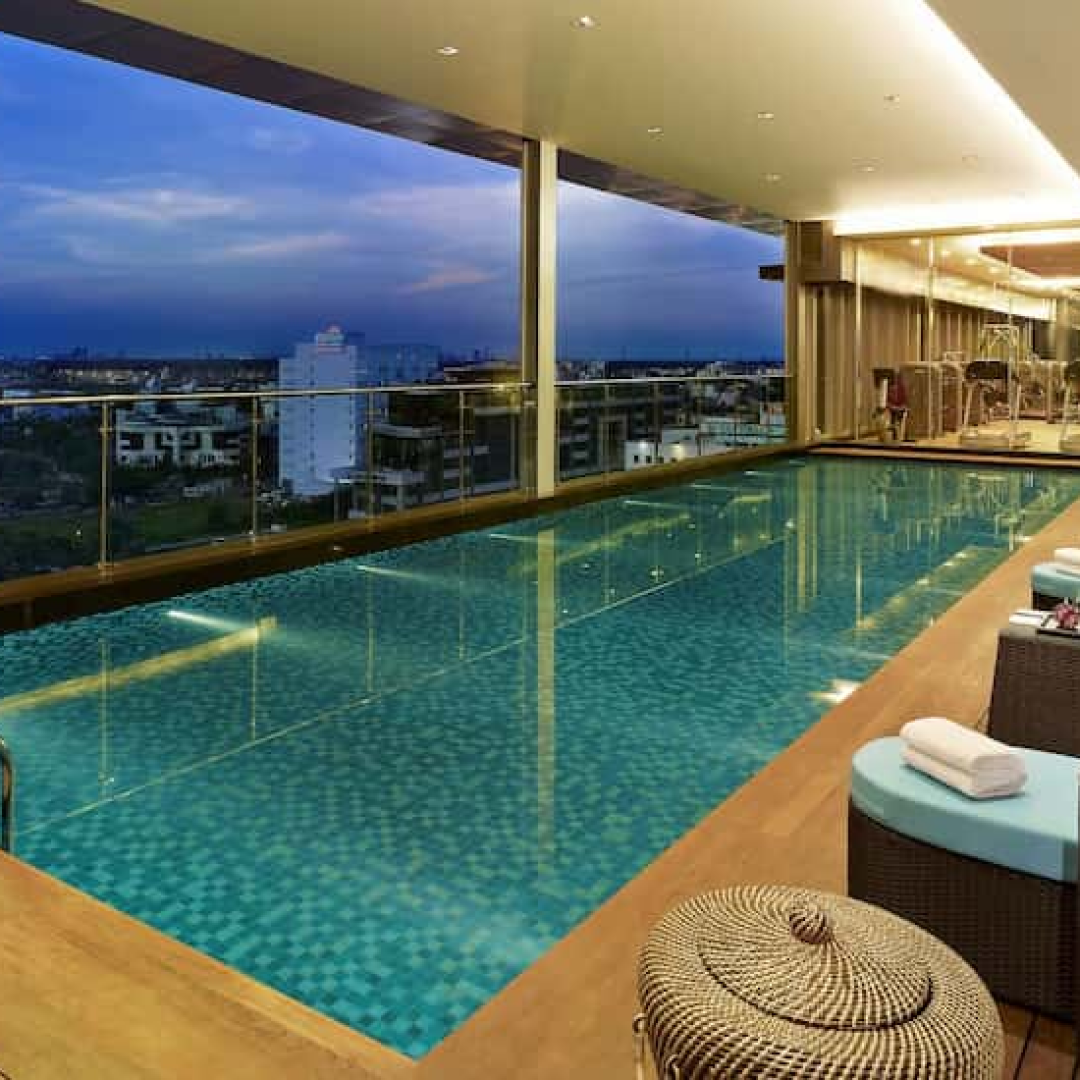
- Indoor-outdoor flow is structural, not decorative. The relationship between the living space and the garden, the pool, and the outdoor dining area needs to be resolved in the floor plan, not in the landscaping. A villa that has to open a glass door and step down onto a different floor level to access its pool is already behind. The transition should feel inevitable, not engineered.
- Privacy architecture. Goa’s villa market is built on the promise of seclusion. How the property manages sight lines – from neighbouring plots, from access roads, between different areas of the same property – is a design brief that2 determines how private the villa actually feels to a guest who has paid for privacy.
How to select luxury villa interior designers in Goa
The evaluation should begin with a single practical question: has this firm built and delivered luxury villas in Goa, or are they applying experience from other markets?
The distinction matters because Goa’s villa category has specific requirements – climatic, regulatory, supply chain, aesthetic – that experience in other hospitality formats does not automatically address. A firm that has delivered excellent boutique hotels in Bangalore or Mumbai is bringing real capability. They are not necessarily bringing Goa villa capability.
Beyond category experience, the selection filters that matter most:
- Can they show completed villa projects with references from owners who have operated for at least one full season? Not at handover. Post-monsoon, when the first material tests have been run and any specification failures have surfaced.
- Is their manufacturing in-house? Custom villa elements – bespoke furniture designed for specific rooms, handcrafted joinery, signature lighting – need to be made with precision and delivered to spec. Firms that outsource this lose control of the outcome at the most visible points of the project.
- Do they have a single project manager accountable for the full scope? Villa projects are intimate. The owner is often closely involved. The project management relationship needs to be continuous, not handed between a design lead and a construction lead at the midpoint.
- How do they handle changes during execution? A villa brief evolves. The owner sees the space taking form and makes decisions that deviate from the original. A firm with integrated design and build capability absorbs these changes without a renegotiation. A fragmented model treats each change as a conflict between vendors.
The project that earns the review it needs
Luxury villa guests in Goa write detailed reviews. They describe the bathroom. They mention the quality of the mattress and whether the outdoor sofa was comfortable enough for an evening. They note if the pool deck gets too hot in the afternoon and whether the lighting in the bedroom was warm enough at night.
These are design outcomes. Every one of them is in the brief, or should be. Interior turnkey projects that are managed as integrated design-and-build engagements produce these outcomes more reliably than ones built through fragmented vendor chains – because the people who made the decisions about the outdoor sofa and the pool deck and the bedroom lighting are the same people who built them.
That is not a marketing claim. It is a process outcome, and it shows up in operating performance within the first season.