Delhi restaurants do not fail quietly. They close with a full Instagram following and empty tables.
The city’s F&B market is genuinely brutal – not because diners are fickle, but because they have too many options and near-zero switching cost. A new restaurant opens within walking distance of an older one, and if the space feels more alive, more considered, more worth photographing and returning to, the older one starts losing covers without ever understanding why.
This is why restaurant interior designers in Delhi have become something closer to brand strategists than decorators. The design conversation has shifted. It is no longer about making a space look attractive. It is about making it work – commercially, operationally, and emotionally – in one of the most competitive dining markets in India.
What follows is an honest look at the trends that are actually driving customer behaviour in Delhi’s restaurant scene right now, and what brands should be thinking about before their next fit-out.
The trend nobody calls a trend: operational design
Start here, because most lists skip it entirely.
The most consistent thing separating Delhi restaurants that build long-term footfall from those that peak and fade is whether the interior was designed around the operation or around a visual concept. These are not the same thing, and the gap between them shows up fast.
A space that photographs brilliantly but seats forty people inefficiently, puts the kitchen pass in the wrong position, or uses materials that look worn after three months of real service – that space is working against the business every single day.
Smart restaurant interior design starts with the flow: how food moves from kitchen to table, how staff move without crossing customer sightlines, where the noise goes, and where it does not. The visual language comes after. Not before.
What Delhi’s diners are actually responding to
Materiality over theme
Delhi restaurants went through a long phase of themed interiors. Industrial loft. Vintage Mughal. Urban jungle. Exposed brick with Edison bulbs. Most of those have aged badly, not because the execution was poor but because the concept was legible in under thirty seconds. Once you have read the theme, there is nothing left to discover.
What is working now is materiality – spaces where the interest comes from the quality and layering of real materials rather than a decorative concept. Honed stone, hand-finished plaster, warm timber with visible grain, woven textiles with actual texture. These spaces do not announce themselves. They reveal themselves slowly, and that slow reveal is exactly what makes people want to come back and sit in them again.
Lighting as architecture
This has moved from a supporting element to a structural one. The best-performing Delhi restaurants in the last two years have treated lighting as part of the architectural brief, not as a finishing decision made after everything else is done.
What that means practically: pendant placement decided alongside table positioning, not after. Accent lighting that creates depth in a room rather than illuminating it flatly. Warm colour temperatures that make food and faces look good simultaneously. Dimmers that shift the atmosphere between lunch and dinner service without a single physical change to the space.
Bad lighting is one of the fastest ways to lose a customer who cannot articulate why they are not coming back. They will not say the light was wrong. They will just feel slightly less comfortable than somewhere else.
Zones that give customers control
The open-plan dining room is losing ground in Delhi. Not because it is aesthetically wrong, but because modern diners – particularly post-pandemic – want spatial choice. Where do I sit if I am here for a business lunch? Where do I go if I want energy and proximity to other tables? Where is the quiet corner for a date?
A single undifferentiated dining floor cannot answer all three questions. The restaurant interior designers in Delhi who are getting the best results right now are designing for zones within a space: distinct pockets of experience that share the same visual language but offer different social dynamics.
This does not require a large floor plate. It requires considered placement of partitions, banquettes, ceiling heights, and lighting – all of which are design decisions, not construction ones.
What customers photograph, and why it matters
A space that generates organic social sharing is not an accident. It is designed.
The trigger for a photograph is almost always a moment of visual surprise: an unexpected material detail, a ceiling treatment that does not match what the entrance suggested, a corner that looks completely different from the rest of the room. These moments need to be deliberately placed, not hoped for.
The brands investing in hospitality fit-out services that understand this brief are building it into the design from day one. Where is the hero visual? Where is the secondary one? Which wall does a guest face when seated at the most-requested table? That wall is doing marketing work. It should be treated that way.
The trends worth watching in Delhi’s restaurant market
A few specific directions that are showing up consistently across new openings:
- Raw and unfinished aesthetics with premium execution – exposed concrete and bare metal, but done with precision rather than budget constraint
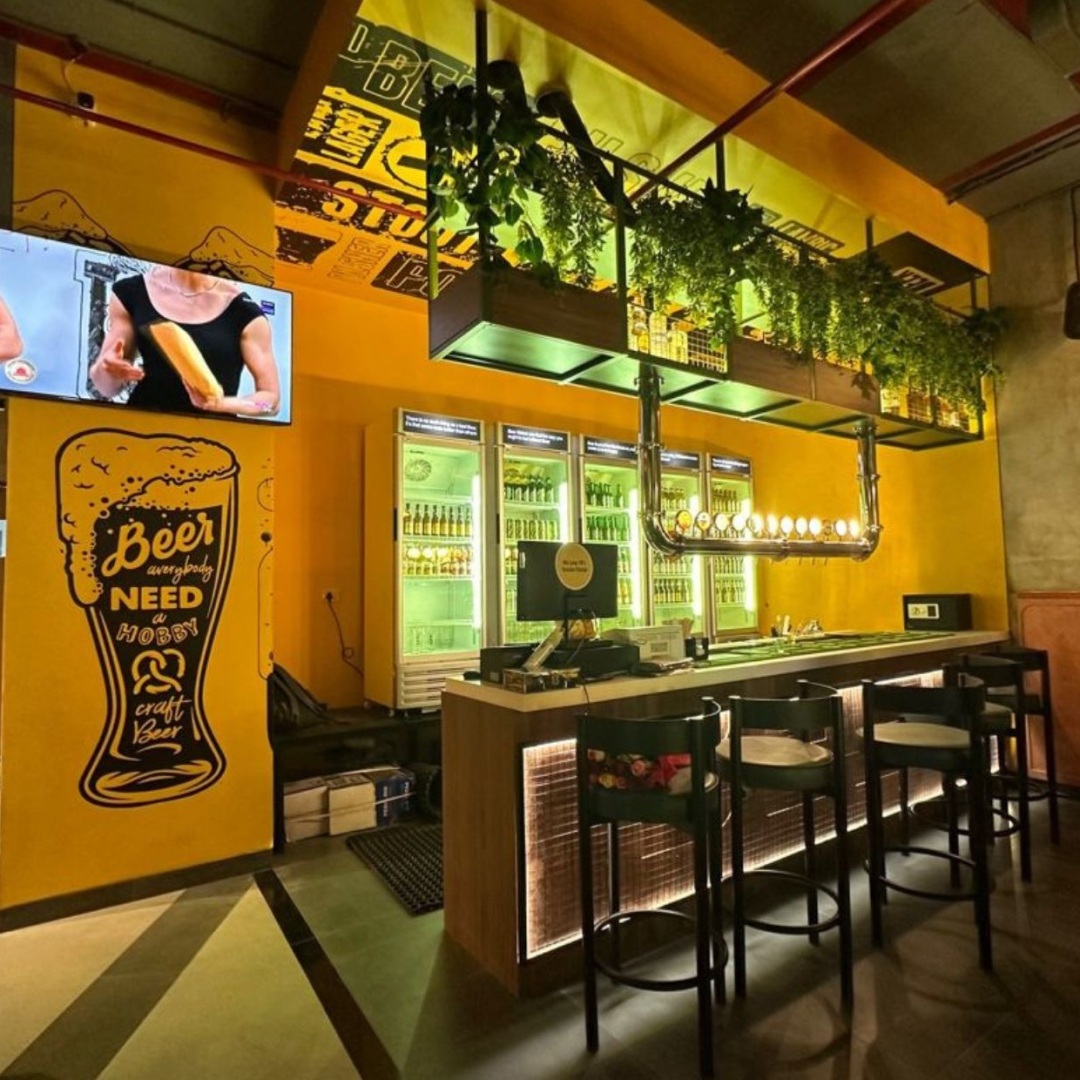
- Indoor greenery with structural intent – plants integrated into partitions and ceiling features, not placed in corners as afterthoughts
- Counter dining and open kitchen theatre – the kitchen as part of the experience, not hidden behind a wall
- Acoustic treatment as a design feature – panels, baffles, and soft materials chosen for how they look as much as how they perform
- Flexible furniture configurations – spaces that can shift from all-day casual to evening dining without a renovation
None of these are decorative choices. Each one solves a specific commercial problem: customer comfort, social media visibility, staff efficiency, repeat visit rate.
The fit-out conversation brands are not having early enough
Here is where most Delhi restaurant projects lose time and money.
The design brief and the fit-out brief get treated as sequential. Design first, then figure out who builds it. By the time a firm that handles hospitality fit-out services is brought in, decisions have already been made that are expensive to change: structural elements, MEP rough-ins, custom fixture specifications.
The brands that open on time and on budget are the ones where the design team and the fit-out team are the same entity – or at minimum, in the room together from the first week. When manufacturing capability informs design decisions rather than receiving them, custom pieces are buildable, lead times are realistic, and the site does not become a negotiation between two vendors with different accountabilities.
What a Delhi restaurant needs from its interior right now
Pull it together and the picture is clear:
- Design that starts with operational flow, not visual theme
- Materiality that rewards repeat visits rather than explaining itself on the first one
- Lighting treated as a structural decision made early, not a finishing detail made late
- Zones that give different customer types different experiences within the same space
- Deliberately placed visual moments that do marketing work without any media spend
- A fit-out process where the team building the space was involved in designing it
Delhi diners are not hard to please. They are hard to surprise. And a space that genuinely surprises them – quietly, through how it feels rather than how it announces itself – is one they will keep returning to.
That is not an aesthetic standard. It is a commercial one.