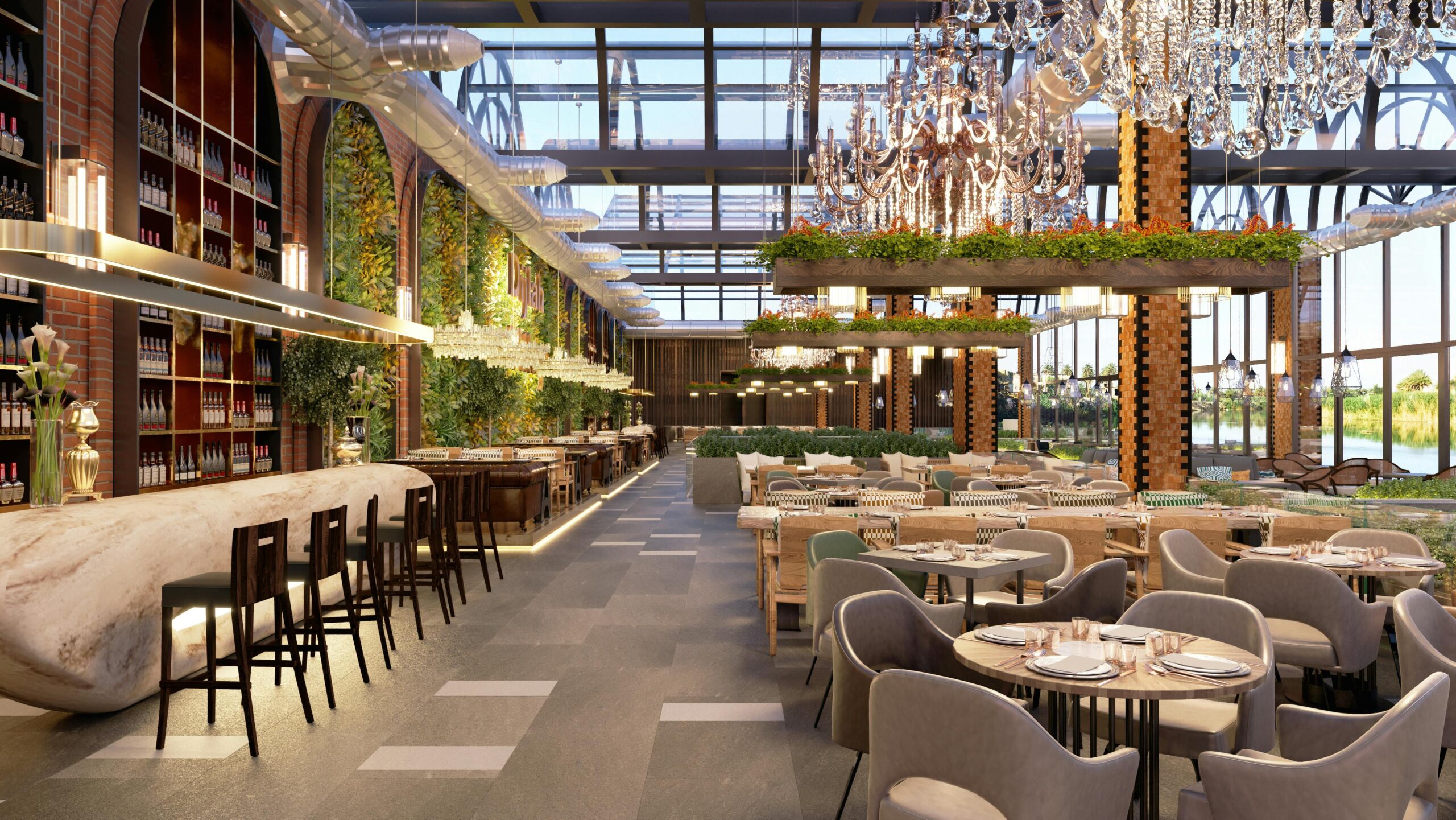
Delhi adds a new restaurant, café, or hotel property almost every other day. That stat sounds exciting until you are the one trying to build one of them. Nobody warns you early enough about how many decisions pile up between “we have a space” and “we are actually ready to open.” Hospitality interior design in Delhi is not a line item or a single service – it is a relay race with about ten handoffs, and most projects drop the baton somewhere in the middle.
This guide covers what turnkey fit-out genuinely means for hospitality spaces, where Delhi projects typically go wrong, and how to tell apart vendors who execute from those who are only good at pitching.
What “turnkey” actually means – and what it does not
People throw around “turnkey” loosely. Worth being precise.
A genuine turnkey engagement covers the full chain: concept design, working drawings, material sourcing, manufacturing or procurement, civil work, MEP (mechanical, electrical, plumbing) coordination, furniture installation, and handover. One contract. One point of accountability.
What it is not: a contractor who also does a mood board. That is a fit-out vendor with a design add-on. The distinction matters more than it sounds because when timelines slip or materials do not match the concept, there is suddenly no single person responsible.
For hospitality spaces specifically, the stakes are higher. A retail store can open with minor snags. A restaurant or hotel lobby with incomplete lighting, mismatched finishes, or half-installed bar fixtures simply cannot.
Why Delhi hospitality projects are harder than they look
The permitting reality
Delhi is not one jurisdiction. Multiple municipal bodies, zone-specific fire NOC requirements, and property-type classifications mean a standalone restaurant in South Delhi runs on completely different approval tracks than a hotel lobby in a mixed-use development in Aerocity. Fit-out timelines that look workable on paper get much tighter once approvals enter the picture.
Any hospitality interior design company worth working with will flag this before you sign – not three months into execution.
Supply chain friction
The materials that make hospitality interiors work do not come from one place. Custom joinery, stone cladding, speciality lighting, acoustic panels – Rajasthan, Gujarat, Delhi NCR importers, each on their own lead time. Coordinating all of that without in-house manufacturing is where projects start losing weeks quietly, before anyone notices.
The coordination problem nobody talks about
Civil contractors, interior contractors, MEP teams, and furniture vendors each work to their own schedules. Nobody automatically syncs with anyone else. Without one agency managing the sequence, you get the thing every hospitality horror story is built around: a bespoke bar counter arriving on site two weeks before the plumbing behind it is finished. Sitting in a warehouse because the floor finish is still wet.
That specific chaos is what hospitality fit-out services are meant to prevent. Whether a given agency can actually prevent it is a different question entirely.
Phases of a hospitality fit-out: how it should work
A well-run turnkey engagement follows a clear sequence. Here is how it typically breaks down:
- Discovery and brief: Understanding the brand, the guest experience, the budget ceiling, and any non-negotiables around materials or timeline
- Concept design: Spatial planning, mood boards, material palette, and 3D renders – not decoration decisions but structural ones about how the space will feel and function
- Design development: Working drawings, BOQs (bill of quantities), vendor quotes, and final material sign-offs
- Manufacturing and procurement: Custom fixtures, furniture, cladding, and signage going into production – this is where in-house manufacturing capability separates strong vendors from intermediaries
- Site execution: Civil, MEP, and interior work running in a managed sequence, not independently
- Finishing and installation: Furniture, lighting, décor, and all bespoke elements installed against the approved design
- Handover: Snagging, final walkthroughs, and documentation
The reason this matters is that any break in this chain – even a small one – creates the kind of delays that push hospitality openings by weeks. And delayed openings in Delhi’s competitive hospitality market are expensive.
What to look for in a hospitality interior design company
Not every agency that calls itself a hospitality interior design company operates at the same depth. When evaluating vendors for a Delhi project, these are the things that actually matter:
- Portfolio across hospitality categories. A firm that has done only cafes will approach a hotel lobby differently than one that has worked across F&B, hotels, and retail. Ask for projects similar in scale and type to yours.
- In-house manufacturing. This one is underrated. Agencies with their own manufacturing facility can control quality, compress lead times, and handle revisions without renegotiating with third parties. When something needs to change on site, it gets changed.
- Single point of contact through execution. The person who sells you the project should not disappear once the work begins. Accountability does not transfer well in hospitality fit-outs.
- Experience with Delhi’s regulatory context. Approvals, fire NOCs, and municipal requirements are not generic knowledge. Local experience matters here.
- References you can actually call. Not just brand logos on a pitch deck – references from clients who opened on time, within budget, and without material quality disputes.
Where Delhi hospitality fit-outs go wrong: the real list
Honest version, not the sanitised one:
- Agencies that design well but build through contractors they do not control. You get a beautiful concept and a chaotic site.
- Budget estimates that exclude MEP coordination costs. This is one of the most common budget overruns in Delhi hospitality projects.
- Material substitutions during execution. Approved marble gets replaced with something “similar.” Approved lighting gets substituted due to lead time. Without tight procurement oversight, this happens more than clients expect.
- Timeline promises that do not account for Delhi’s approval timelines. If a vendor gives you a delivery date without first knowing the permit status of your property, that date is a guess.
- No manufacturing capability on custom elements. Anything truly custom – a backlit bar panel, bespoke seating, a reception desk with integrated stone and steel – needs someone who can actually make it, not just source it.
Knowing these risks does not make a project immune to them. But it changes the questions you ask before signing anything.
Hotel interior design in Delhi: what the market looks like right now
Delhi NCR’s hospitality development is running across multiple formats simultaneously – luxury hotels in Aerocity and Gurugram’s Golf Course Road corridor, boutique properties in Hauz Khas and Mehrauli, mid-segment hotels near expressway corridors, and a wave of experiential F&B formats across South and Central Delhi.
Each of these formats demands a different approach to fit-out. A 200-key business hotel in Aerocity needs standardisation, speed, and durable materials. A 15-cover omakase counter in Lodhi Colony needs obsessive material detailing and millimetre-level custom joinery.
Hotel interior design services that work well across both ends of this spectrum typically have a strong design capability backed by real manufacturing. Because the aesthetic language changes but the execution demands are just as high on both sides.
A practical checklist before you engage a fit-out vendor
Before signing anything, run through these:
- Do they have an in-house manufacturing facility, or do they outsource all fabrication?
- Can they show you references from hospitality projects in Delhi or Delhi NCR specifically?
- Do they have a dedicated project manager assigned to your job, with a defined escalation path?
- Is the contract structured as a single turnkey agreement or as multiple parallel contracts?
- What is their process when a material or design element needs to change mid-execution?
- Are approval and permit timelines included in their project plan, or treated as the client’s problem?
None of these are trick questions. Good vendors answer them readily. The ones that get evasive on items two through six are telling you something.
The right vendor changes the opening, not just the aesthetics
There is a version of hospitality fit-out where the space looks good in photographs but took six months longer than planned and cost thirty percent more than budgeted. Delhi has seen a lot of that version.
The better version is a space that opens on time, holds up under daily operational load, and actually reflects what the brand wanted – not what was available when things went sideways.
Hospitality fit-out services done properly are not about square footage or material budgets. They are about whether a brand can walk into their new space on the date they planned and start operating. That outcome requires a vendor who controls the full chain: design, manufacturing, sourcing, and site execution under one roof.