Shutting down to renovate is expensive. Three weeks of zero revenue on top of a renovation bill is a combination most restaurants don’t survive. But doing nothing is also expensive. Just slower.
The good news: a full closure is not the only option. Most restaurants can modernize in phases, in sections, sometimes in a single weekend. What matters is knowing which changes move the needle and which ones just move furniture.
The Renovation Trap Most Owners Walk Into
There’s a particular kind of paralysis that sets in when a restaurant owner knows the space needs work but can’t afford to stop trading. So nothing happens. Six months have passed. A competitor opens two streets over with better lighting and smarter seating. Now the problem is twice as expensive to fix because the brand has also drifted.
The trap is framing this as a binary: renovate fully or do nothing. It is not binary. It is a sequencing problem.
Good restaurant interior design in Delhi accounts for this. The best projects don’t shut down operations. They redesign around them. And the five moves below are the ones that produce the most visible results with the least operational disruption.
Way 1: Replace the Lighting Before Anything Else
Lighting is the fastest lever in any restaurant refresh. It is also the most underestimated one.
Most restaurants in Delhi were lit for function, not atmosphere. Fluorescent overheads. Uniform brightness. No variation between the bar, the dining floor, and the entrance. That flatness communicates nothing. Worse, it makes food look uninviting in photos, which in 2025 is a problem that shows up in your Google rating before it shows up in your revenue.
Replacing fixtures does not require closing. It requires two electricians and a weekend.
The shift to warm, layered lighting changes how a space photographs, how long guests stay, and how the same food reads on the plate. A biryani under a 3000K pendant looks different from a biryani under a 6500K tube light. The biryani is identical. The experience is not.
Way 2: Change the Seating Configuration, Not Just the Furniture
New chairs and tables are the obvious move. They are also the expensive ones that often change the least about how a space feels.
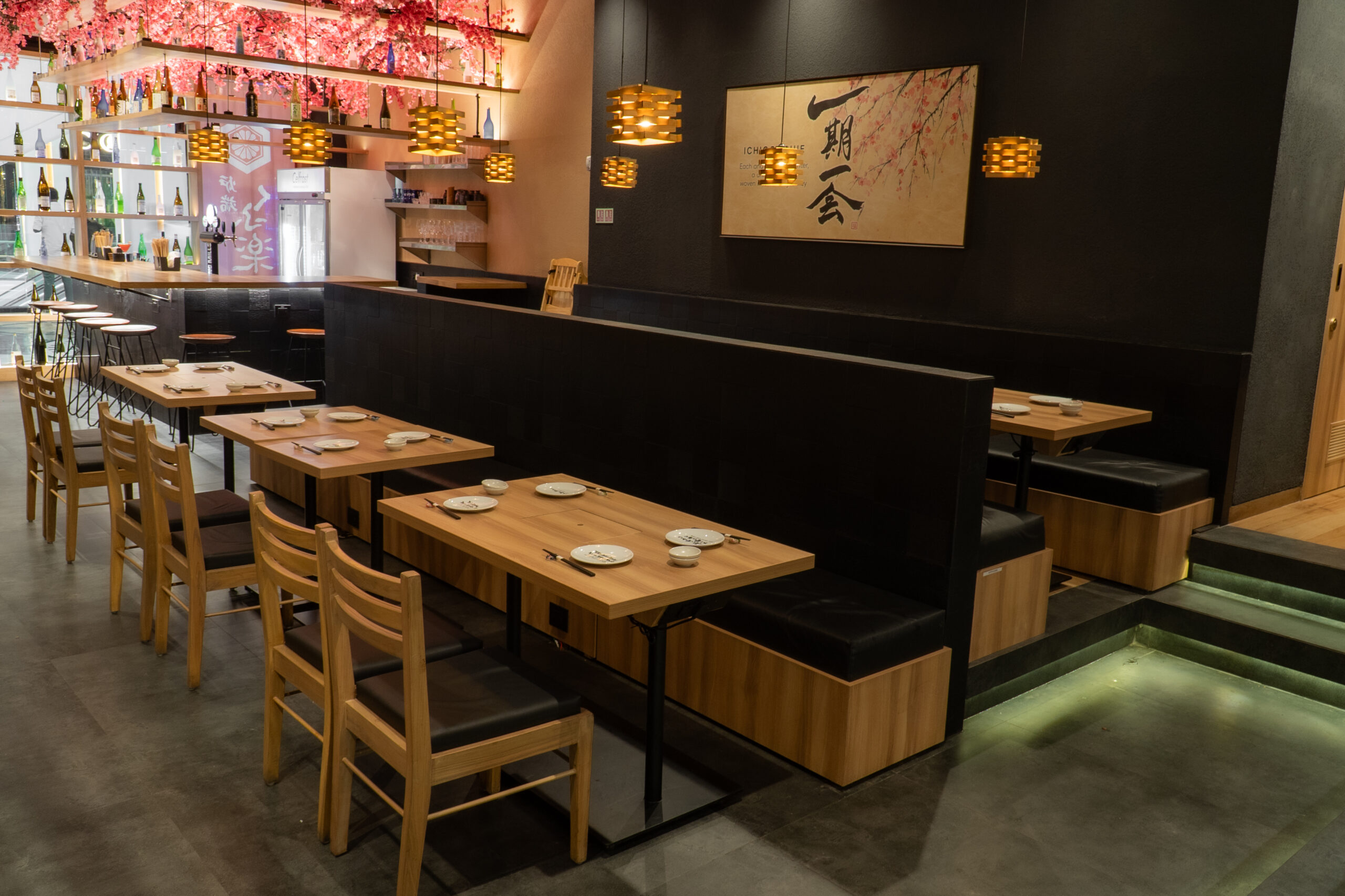
What actually changes the feel is configuration. How tables relate to each other. Whether there is a booth option for groups who want privacy. Whether the bar has perch seating that pulls in solo diners who would otherwise leave.
Most Delhi restaurants are over-tabled. Owners maximise covers at the cost of comfort, and then wonder why repeat visits drop off. A space that seats 60 people comfortably converts better than a space that squeezes in 80 and feels crowded.
Restaurant interior designers in Delhi who understand operations will tell you: removing two tables and creating one good corner can lift average spend per head more than a new menu section. Guests who feel comfortable order dessert. Guests who feel pressed for space ask for the bill.
Reconfiguring seating happens in a day. It costs almost nothing if you already own the furniture. And it changes the spatial logic of the whole room.
Way 3: Redesign the Entry, Not the Interior
First impressions set the frame for everything that follows. A restaurant with a strong entry experience already has an advantage before the first order is placed.
Entry work does not mean a full facade renovation. It means:
- A clear sight line from the door to the host station
- A waiting area that does not feel like a hallway
- Signage that works at night, not just in daylight
- A physical threshold moment: a material change, a level change, a lighting shift
This is a contained scope. It does not touch the kitchen, the dining floor, or the bar. It can be built and installed over a weekend. And it changes what a first-time guest tells their friends about the place.
Way 4: Give One Section a Full Treatment
Rather than spreading the budget thin across the whole restaurant, pick one zone and go deep on it.
The bar. The private dining alcove. The outdoor section that has been underperforming. A single well-designed corner becomes the section every table wants to book. It becomes the photo that circulates. It signals that the restaurant has design intent, not just furniture.
This is the approach serious restaurant interior designers in Delhi use for phased projects. Start where the ROI is clearest. Build the section that photographs, that drives reservations, that creates social proof. Then use that momentum to fund the next phase.
Splitting the project across zones also means no closure. One section gets taken offline for two weeks while the rest trades normally. Revenue doesn’t stop. The refresh keeps moving.
Way 5: Fix the Things That Register Below Conscious Awareness
There is a category of problems that guests do not articulate but definitely feel. Cracked grout on the floor near the kitchen pass. Fabric booth seating that has absorbed two years of cooking smells. Menus that are laminated, bent, and slightly sticky.
These are not dramatic failures. Nobody leaves a one-star review about grout. But they accumulate into an ambient sense that the place is not quite cared for. And that feeling affects whether someone comes back.
Restaurant interior design in Delhi that handles the visible is only half the job. The materials that guests touch, smell, and interact with directly do more work than any wall treatment. Recover the booth seating. Regrout the floor sections that see the most traffic. Replace the menu folders.
This is weekend work. Low cost. High impact on repeat visit rate.
Where Atmosphere Comes In
Most restaurant owners in Delhi who try to run a phased refresh end up managing four separate vendors who are not talking to each other. The lighting contractor finishes. The seating arrives from a different supplier. The booth work gets handed to whoever the owner knows. Nobody is working from the same plan.
Atmosphere builds commercial spaces with design, manufacturing, and fit-out under one roof. Their team works on phased hospitality projects specifically because the alternative, a complete closure, is not a realistic option for most operating restaurants.
For owners looking at restaurant interior design in Delhi without stopping trading, that integrated model is not just convenient. It is the only way to keep a phased project from becoming a permanently unfinished one.