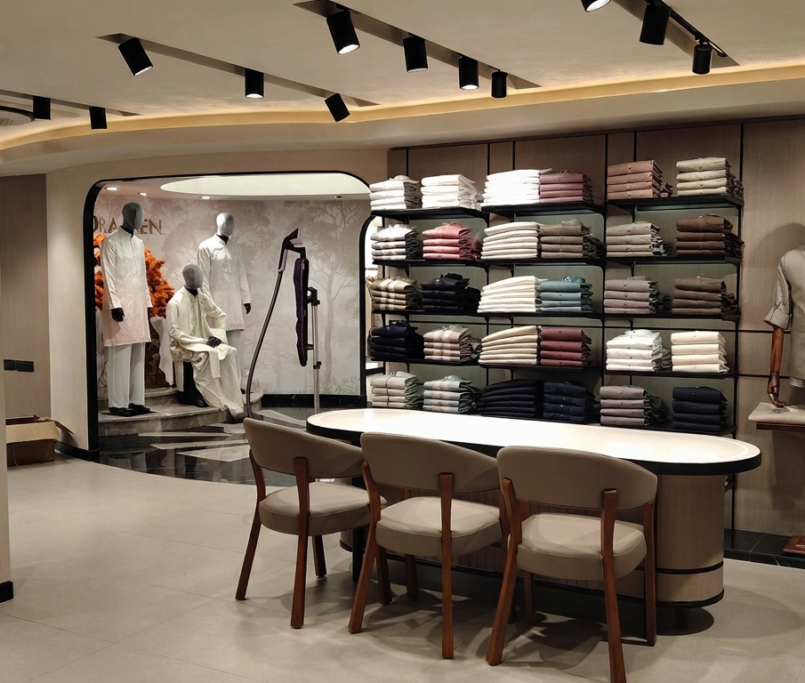
A retail store is not merely a location where the products are on shelves. It is where the customers make the brand a reality.
The movement of people, their stops, their search, and subsequent buying are all silently guided by every aisle, display, and light, as well as the materials.
Once a store is doing well, it is hardly by chance. It is an outcome of the clarity of design, disciplined performance, and an exact manufacturing in concert.
Retail spaces in Atmosphere are not perceived as one-off design projects. They are provided as a complete system where design, construction, fixtures, and furniture are executed as a single execution pipeline.
This practice helps to eliminate coordination lapses, minimizes the time taken to complete projects and the store would be fit to operate as soon as it opens.
This is how high performance retail environments are in reality being established.
1. Start With Retail Strategy, Not Just Visual Design
The initial step before discussing the materials, finishes or lighting is knowing how the store should perform.
A few basic, yet, essential questions have to start the retail design:
- What do you want customers to see the first thing they see?
- To what place ought they naturally repose and enquire?
- What are the areas that foster experimentation and engagement?
- Where do you want the activity of checkout to occur?
- What is the approach to the evolving collections?
The customer experience is guided by a robust retail layout but not in a very vocal manner.
The categories of products, display of features, pathways of circulation, and focus point of display should be placed in a manner that makes the store look intuitive to move around. When this rationale is accurate, customers will flow through the space automatically and product discovery will be painless.
This is what forms the basis of a retail experience that enables brand narration as well as commercial success.
2. Turn Brand Identity Into Buildable Architecture
Many retail concepts look impressive on presentation boards but struggle when they reach construction.
The reason is simple. Design concepts often remain abstract unless they are translated into precise technical documentation.
At Atmosphere, design intent is aligned with build feasibility from the earliest stages. This ensures that the aesthetic vision of the brand can actually be executed on site without compromise.
Key technical aspects considered early include:
- Shopfront and façade coordination
- Fixture ergonomics and display heights
- Material compatibility and durability
- Electrical and lighting integration
- Maintenance access and serviceability
- Safety and high footfall durability
This alignment prevents costly redesign cycles and ensures the final store reflects the original concept accurately.
3. Fixtures Shape the Retail Experience
Fixtures are often misunderstood as decorative elements. In reality, they are operational infrastructure for retail.
They determine how merchandise is presented, how quickly stock can be replenished, and how easily visual merchandising updates can be implemented.
The efficiency of the retail floor depends heavily on fixture design.
Atmosphere supports this through integrated capabilities that include:
- Custom retail fixture development
- Bespoke furniture manufacturing
- Display system prototyping
- Millwork production
- Precision installation
With design and production under control, Atmosphere makes sure that fixtures fit perfectly to the space arrangement and merchandising plan.
The firm has a 40,000 sq. ft. manufacturing factory that has state-of-the-art machines and material capacity that can be used to produce complex fixtures of a uniform quality.
It is this integration in manufacturing that enables the ability of moderate retail surroundings to be both aesthetically accurate and operationally efficient.
4. Execution Is a Carefully Managed Process
Retail buildings are hardly ever blessed with generous time lines.
The most common times when stores are opened are in line with lease agreements, marketing campaigns, product launches and seasonal sales cycles. Delays may be converted into lost revenue.
Atmosphere is a design and build process of retail execution that involves the coordination of several steps at the same time.
The process of work normally consists of:
Design and Approval
Layouts, 3D visualizations, and technical drawings are finalized and approved.
Commercial and Procurement Alignment
Material selections, fixture specifications, and procurement schedules are confirmed.
Manufacturing and Site Preparation
Fixtures and millwork are produced while civil and electrical works begin on site.
Fit-Out and Installation
Flooring, ceilings, lighting systems, and fixtures are installed according to coordinated timelines.
Final Finishes and Handover
Snag checks, quality inspections, and operational readiness checks ensure the store is fully functional.
This integrated process allows Atmosphere to significantly reduce typical fit-out timelines. In many cases, projects that traditionally take 120 to 180 days can be completed within 60 to 90 days through coordinated design-build delivery.
For retail brands, that difference directly impacts how quickly stores begin generating revenue.
5. Retail Environments Must Be Designed for Change
Retail is constantly evolving.
Collections rotate. Visual merchandising themes shift. Promotional campaigns appear and disappear within weeks.
A well designed store anticipates these changes.
This means incorporating flexible systems such as:
- Modular display units
- Adjustable shelving structures
- Reconfigurable signage areas
- Lighting layers that can be redirected
- Service access points for quick maintenance
- Efficient back-of-house storage logic
When stores are designed with adaptability in mind, brands can refresh their environments without expensive structural modifications.
This flexibility becomes particularly important for fashion, jewellery, lifestyle, and technology retail formats where product assortments change frequently.
6. Premium Finishes Must Withstand Everyday Use
Luxury retail environments often rely on refined materials and intricate finishes. However, durability is just as important as appearance.
Stores experience constant interaction through:
- Daily cleaning
- High touch surfaces
- Frequent product movement
- Heavy customer footfall
- Lighting exposure
- Visual merchandising updates
Selecting materials that maintain their quality under these conditions requires careful consideration.
Atmosphere evaluates finishes based on both aesthetics and performance, ensuring that surfaces retain their integrity even in high traffic retail environments.
The goal is to create spaces that continue to look exceptional long after opening day.
Retail Spaces Delivered Across Multiple Sectors
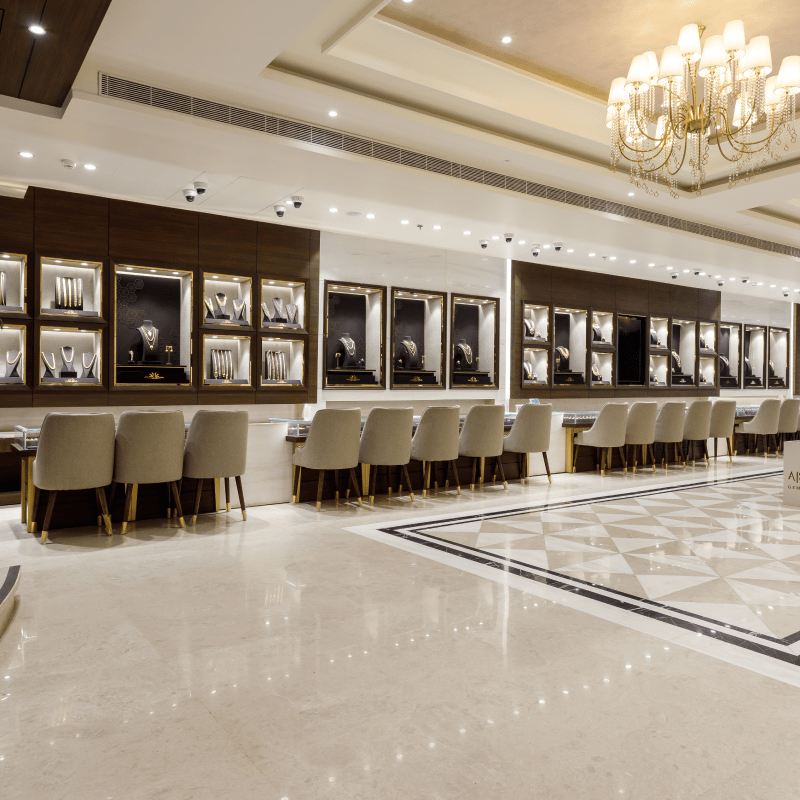
Atmosphere has provided retail, hospitality and lifestyle environments in a diverse spectrum of industries such as fashion, jewellery, luxury accessories, hospitality and consumer electronics.
The portfolio of projects that the company has been undertaking comprise works on both the established and emerging brands in the following categories:
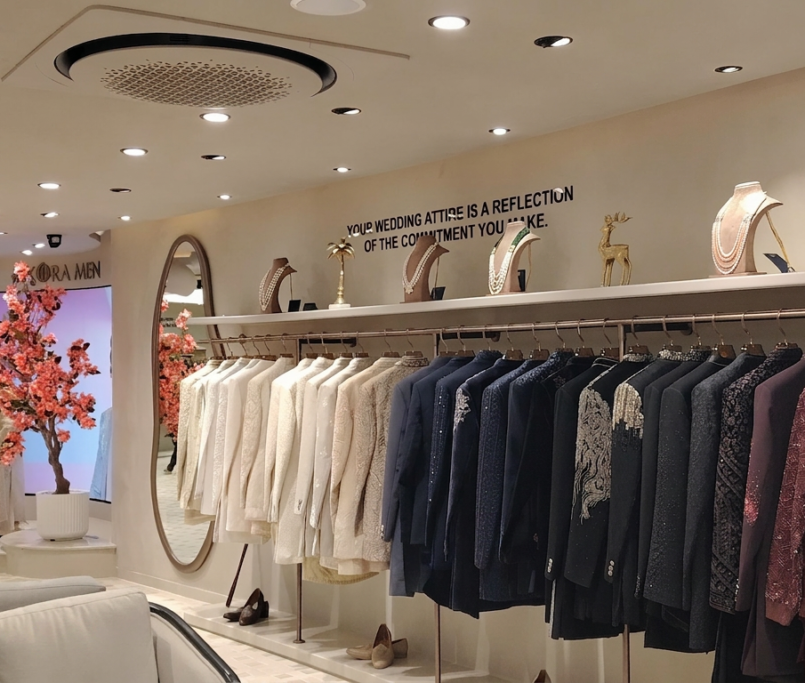
- Luxury fashion and apparel
- Gold and high end accessories.
- Lifestyle and retail chains
- Restaurants and hospitality.
- Electronic stores and technology stores.
Among the major brands that can be linked with the Atmosphere projects, there are Kalki Fashion, Arnika, Aisshpra Gems & Jewels, Solitario, Robata Kuuraku, Michael Kors, Emporio Armani (EA7), TUMI, Longchamp, Pepe Jeans, Aza Fashion, Libas, and Reliance Jewels, among others.
This portfolio has been diversified to signify flexibility in designing and building strategies in various retail formats and customer expectations.
The Value of Integrated Retail Delivery
The most successful retail setting has three attributes:
They represent the brand clearly.
The store environment should be used to directly form the identity of the brand and its positioning to the customers.
They function efficiently.
The operations of the staff, inventory control, and customer traffic must be operating in synergy.
They open on schedule.
A timely launched store safeguards marketing strategies, lease agreement and sales targets.
All three of those are always difficult to accomplish without tight coordination between the design departments, the manufacturing departments, and the field implementation.
This is precisely the integrated method of atmosphere that offers retail setting by integrating design skill, construction capacity, and furniture production into one implementation model.
The outcome is a retail environment not only aesthetically appealing but also fully functional when the doors open.