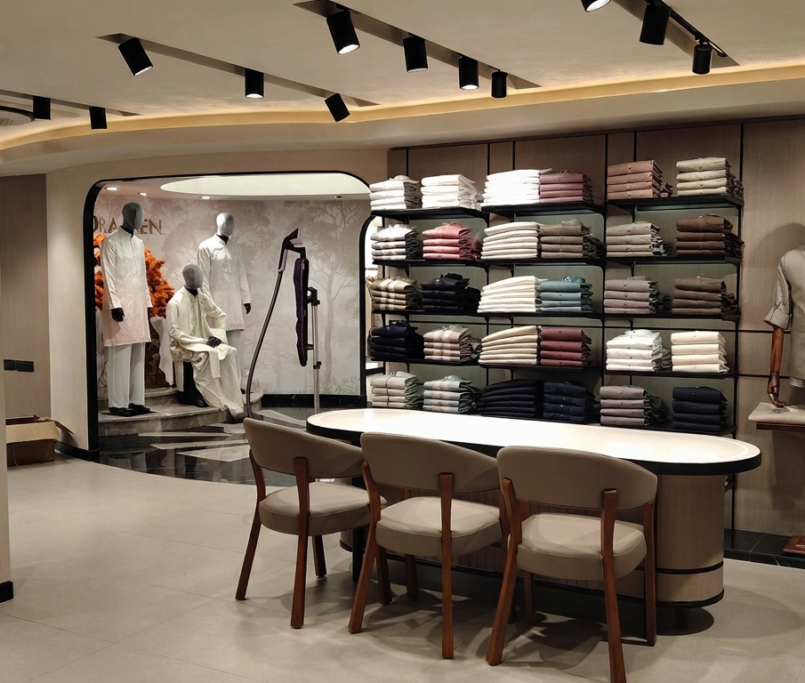
Six cities. Six stores. One brand standard that cannot slip.
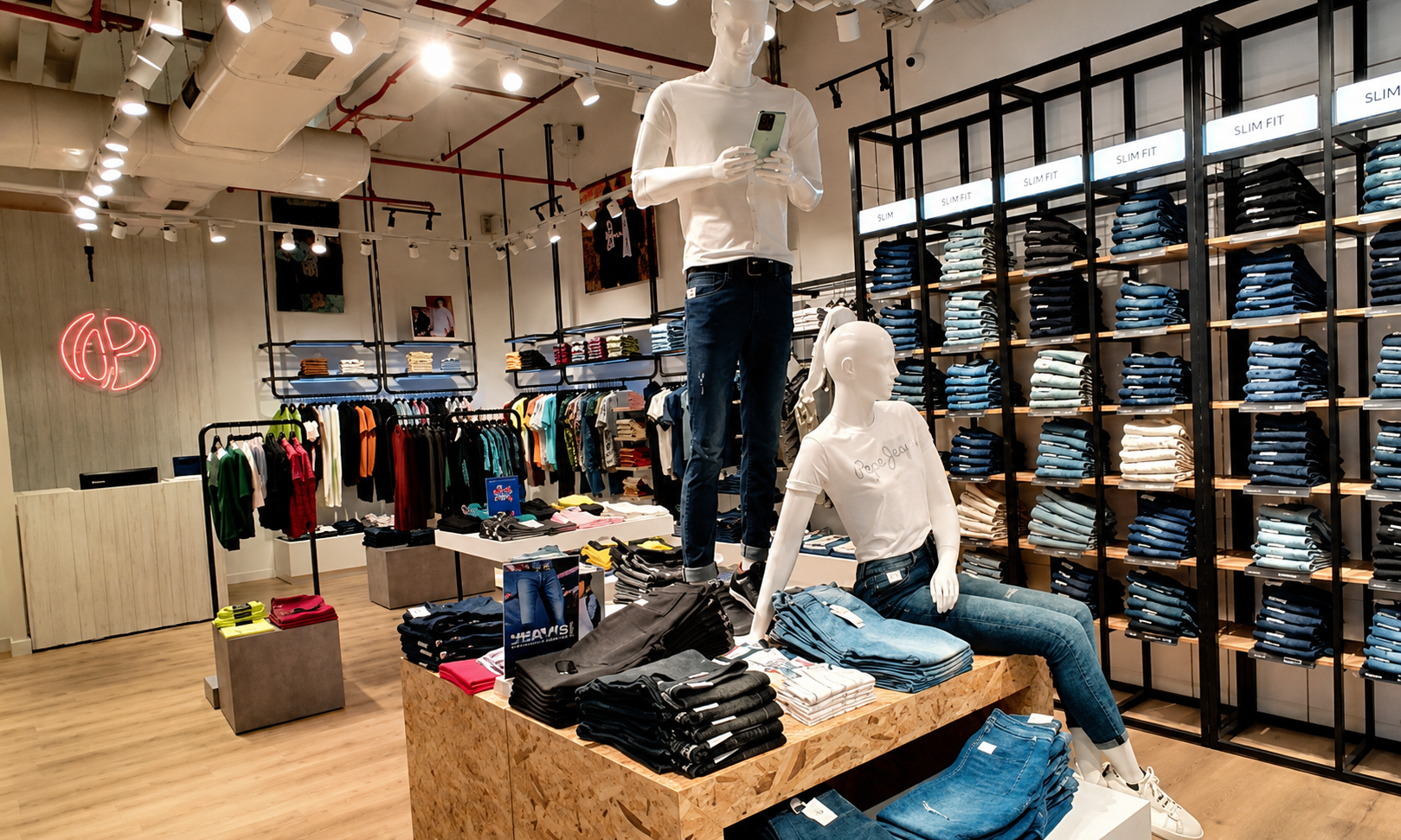
That sentence describes what a national retail rollout actually is, underneath all the campaign launches and store opening photographs. It is a manufacturing and consistency problem before it is a design problem. And for a brand like Pepe Jeans – international, youth-driven, with a distinct visual identity built over five decades – the stakes of that consistency problem are not abstract. They are felt by every customer who walks into a Pepe Jeans fixtures in Pune store having already visited the one in Noida.
She does not want to encounter a different brand. She wants to encounter the same brand, in a new city.
The Consistency Problem Is Really A Manufacturing Problem
Here is what nobody tells you about multi-city retail rollouts: the design is the easy part.
Getting a fixture specification right on paper is straightforward enough with the right brief. The harder problem is reproducing that specification, at the same quality, across six production runs for six locations in six different cities – some of which are Tier 1 metro markets and some of which are not.
When fixtures are sourced city by city from local vendors, brand consistency becomes a negotiation with each vendor’s capability and interpretation. The rail height is close. The finish is similar. The edge detail is almost right. Close enough is not the same as consistent. And a customer walking between the Pepe Jeans fixtures in Ahmedabad and the Pepe Jeans fixtures in Jodhpur will notice the difference, even if she cannot articulate what is different.
When fixtures are manufactured centrally, under one quality standard, and dispatched to each city, the brand standard travels with the fixture. The store in Jodhpur is not an approximation of the store in Pune. It is the same store, in a different city.
What Pepe Jeans’ Fixture Brief Actually Demands
International denim-led fashion brands operate with global store design standards. Those standards exist for a reason – they are the codified version of what the brand looks like at its best, developed over years of retail experience across dozens of markets.
In India, executing against those standards requires a manufacturer who reads the brief for intent, not just instruction. A few things that matter specifically for this category:
- Denim display needs specific fixture geometry: The way folded denim is displayed – the depth of shelf, the spacing between units, the angle relative to the customer’s eye line – determines whether the product looks appealing or stacked. Get it wrong and even the best collection reads as dense and uninviting.
- Apparel hanging fixtures need precise rail heights: Too high and shorter customers cannot access the product naturally. Too low and the store reads cramped. Standard retail heights do not always match the brand’s merchandising logic.
- Finish durability is a fast fashion reality: Stores in this category have high staff interaction with fixtures – seasonal changeovers, daily replenishment, constant visual merchandising updates. The fixtures have to survive this without the finish degrading visibly.
- Hardware consistency is a brand signal: The bolts, the brackets, the rail end-caps – these are details that most customers never consciously notice. They notice when they are inconsistent. When they are right, the store feels assembled with care.
Why City Context Does Not Change The Fixture Standard
The Pepe Jeans fixtures in Bangalore operate inside a consumer market where the shopper has strong familiarity with international retail environments and a clear sense of what premium denim retail should feel like. The Pepe Jeans fixtures in Kerala serve a market with its own retail sophistication and a customer who is often comparing the in-store experience against what she has seen while travelling. The Pepe Jeans fixtures in Noida sit in one of India’s most fixture-literate retail markets – a customer who has browsed dozens of fashion stores in the same mall in the same afternoon.
Different cities. Same conclusion: the fixture standard does not get adjusted down based on market tier.
What adjusts is the site context – the dimensions of the space, the ceiling height, the location of structural columns, the ambient light conditions. A good fixture manufacturer accounts for these variations without compromising the brand specification. That is the work.
What A National Rollout Reveals About Fixture Manufacturing
When Atmosphere delivered custom fixtures across Pepe Jeans’ India rollout – covering cities including Pepe Jeans fixtures in Pune, Pepe Jeans fixtures in Jodhpur, Pepe Jeans fixtures in Ahmedabad, Pepe Jeans fixtures in Bangalore, Pepe Jeans fixtures in Kerala, and Pepe Jeans fixtures in Noida, the central discipline was production consistency across all locations from a single manufacturing facility.
All fixtures produced to the same specification. All finishes held to the same standard. All hardware identical. Each city gets the same brand environment, not a local interpretation of it.
For a brand invested in its store experience as a brand differentiator, that is not a logistical detail. It is the entire point.
At Atmosphere, we manufacture custom retail fixtures for fashion brands, jewellery retailers, and lifestyle brands across India – from a single location to multi-city national rollouts. If your brand is planning an expansion and needs fixtures that hold quality across every city on the list, we would be glad to start that conversation.
FAQs
1. Why are custom retail fixtures important for fashion brands like Pepe Jeans?
Custom retail fixtures help create a consistent brand experience across all store locations. They improve product presentation, support visual merchandising strategies, and ensure that customers receive the same brand impression regardless of which store they visit.
2. How do retail fixtures influence the shopping experience?
Retail fixtures affect how products are displayed, organised, and accessed by customers. Well-designed fixtures improve visibility, simplify navigation, and create a more engaging shopping environment that encourages customers to explore collections.
3. Why is consistency important in a multi-city retail rollout?
Consistency helps strengthen brand recognition and customer trust. When stores across different cities maintain the same fixture quality, finishes, and visual standards, customers experience a unified brand identity wherever they shop.
4. What factors should be considered when manufacturing fixtures for apparel stores?
Key considerations include durability, finish quality, fixture dimensions, display functionality, merchandising requirements, and long-term performance. Fixtures should be designed to support frequent product updates while maintaining their appearance over time.
5. How does Atmosphere support national retail fixture rollouts?
Atmosphere manufactures custom retail fixtures from a central facility to ensure uniform quality and consistency across all locations. The team manages production, quality control, logistics, and installation to help brands maintain the same retail standards across multiple cities.