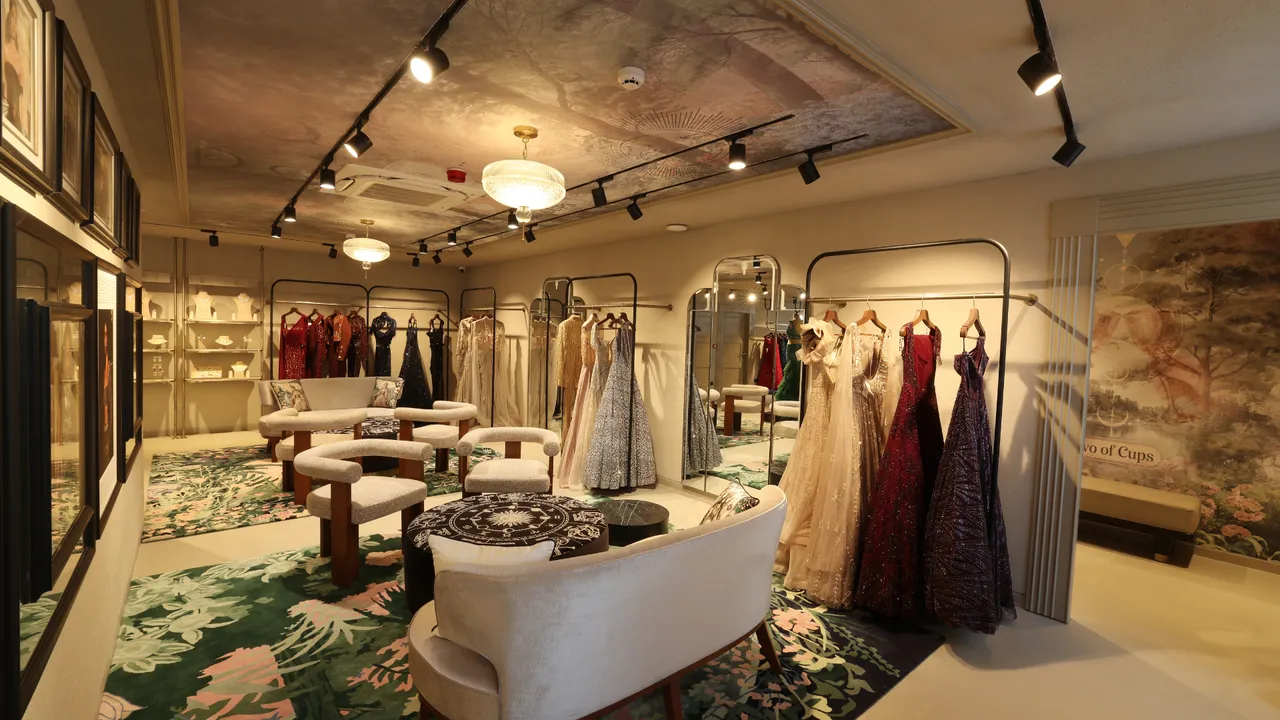
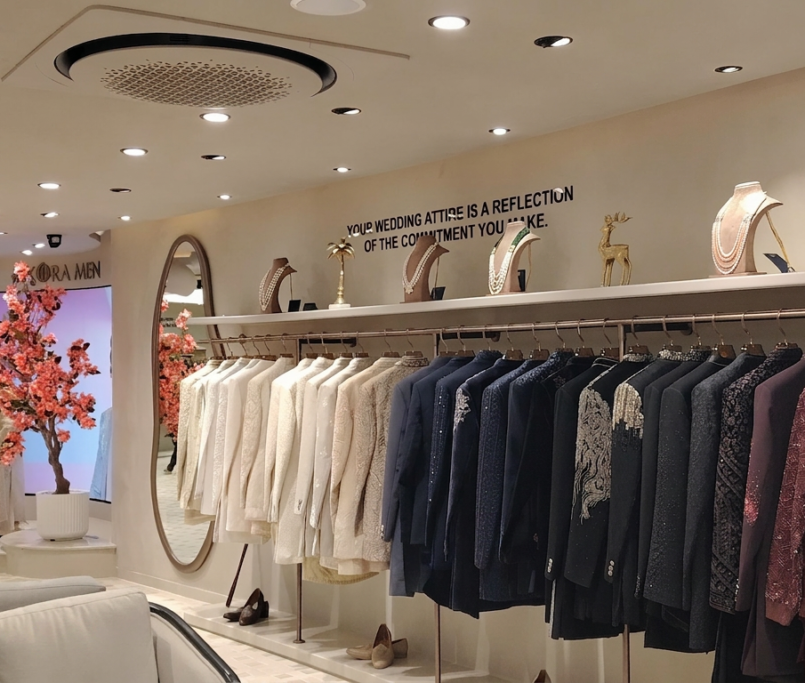
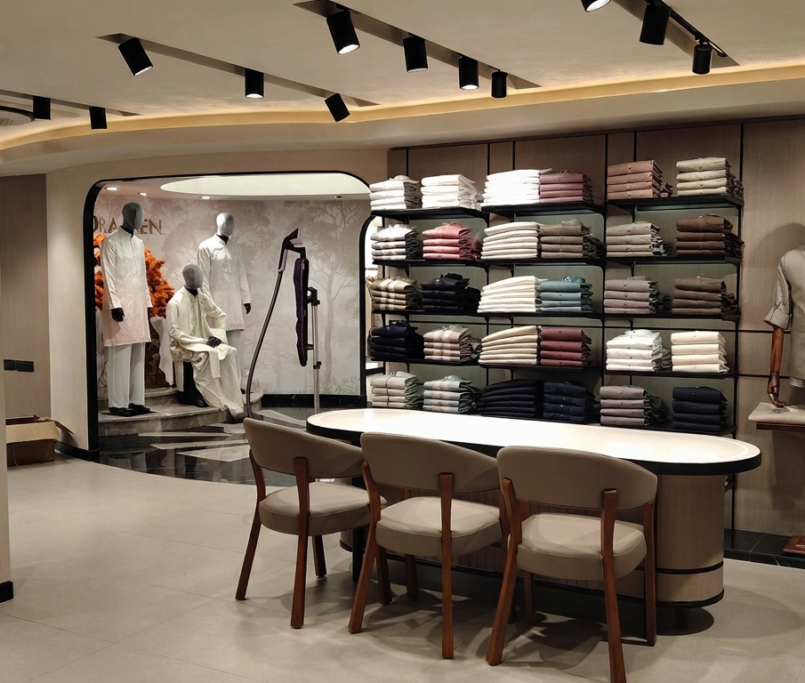
There is a moment in every retail project when the brief stops being a document and starts becoming a space. For the Kalki fashion design and build in Chattarpur, that moment carried extra weight. Nearly 12,000 square feet. A flagship. A brand that has spent years building a very specific kind of trust with its customer, one rooted in heritage, in craftsmanship, in the idea that Indian fashion can be modern without being cold.
Retail design has changed dramatically over the last few years.
For luxury fashion brands, success is no longer measured by how much product can be displayed within a store. Instead, it is measured by how customers experience the space, how comfortable they feel, how naturally they engage with the collections, and how memorable the journey becomes.
The Kalki fashion design and build in Chattarpur reflects this shift in thinking.
Located within Delhi’s Dhan Mill Compound, one of the country’s most experience-driven lifestyle destinations, the store was envisioned as more than a retail environment. The objective was to create a space that aligns with the expectations of modern luxury shoppers while supporting the personalised service that premium fashion retail increasingly demands.
Designing For Experience Instead Of Display
Traditional fashion retail often revolves around large display zones, extensive product visibility, and open browsing experiences.
The Chattarpur store takes a different approach.
Rather than focusing solely on showcasing merchandise, the design centres on the customer’s interaction with the space itself. Every design decision contributes to creating a calmer, more welcoming, and more immersive environment.
The intention was simple: make customers feel comfortable from the moment they enter.
This philosophy influenced the overall spatial planning, customer journey, and retail experience throughout the store.
Creating A Lobby-Like Arrival Experience
One of the defining features of the project is its departure from conventional retail design cues.
Instead of creating an environment that immediately feels like a store, the design introduces an atmosphere that feels closer to a luxury hospitality experience.
A lower ceiling height and a carefully coordinated colour palette help create a sense of warmth and intimacy. The result is an arrival experience that feels welcoming rather than overwhelming.
For customers, this changes the tone of the visit from the very beginning.
The first interaction with the brand becomes more relaxed, more personal, and more intuitive, encouraging visitors to spend time exploring rather than rushing through the space.
A Retail Journey Built Around Privacy
Perhaps the most distinctive aspect of the Kalki fashion design and build in Chattarpur is the way the customer journey has been structured.
Rather than relying on large open-floor browsing, the store introduces dedicated family-focused modules that create a more personalised retail experience.
These modules include:
- Private shopping zones
- Dedicated seating areas
- Attached trial rooms
- Personalised customer assistance
- Spaces designed for families to shop comfortably together
Each module functions as an independent retail environment, allowing customers to engage with collections in a more private and focused setting.
This approach is particularly relevant for luxury fashion retail, where purchasing decisions often involve family participation, extended consultations, and a desire for comfort throughout the shopping process.
Transforming The Store Into Curated Experiences
The design moves away from the idea of a single retail floor filled with products.
Instead, the store is experienced as a sequence of carefully curated environments.
As customers move through the space, they encounter different zones that support individual interactions, conversations, fittings, and product exploration. This creates a more personalised relationship between the customer and the brand.
The result is a retail experience that feels intentional rather than transactional.
Customers are not simply browsing products. They are moving through a series of thoughtfully designed experiences that encourage deeper engagement with the collections.
Consistency Across Multiple Levels
Maintaining continuity in large-format retail environments can be challenging.
At the Chattarpur store, the same design language continues seamlessly across different levels of the space.
The modular retail concept, material palette, spatial character, and customer experience remain consistent as visitors move upward through the store.
This consistency helps strengthen the brand experience while ensuring that customers encounter the same level of comfort, service, and privacy throughout their journey.
Rather than feeling like separate retail floors, the different levels function as connected parts of a single, cohesive experience.
What Luxury Fashion Retail Can Learn From This Project
The Kalki Fashion store demonstrates how luxury retail is evolving.
Today’s customers are looking for more than products. They are looking for environments that feel considered, comfortable, and aligned with the value of the brand itself.
A few key takeaways emerge from this project:
- Experience can be more powerful than display.
- Privacy is becoming increasingly important in luxury retail.
- Hospitality-inspired design can create stronger customer connections.
- Personalised shopping environments encourage deeper engagement.
- Consistency across every customer touchpoint strengthens brand perception.
These principles are becoming increasingly relevant as fashion brands compete not only through product offerings but through the quality of the experiences they create.
A New Direction For Luxury Retail Design
The Kalki fashion design and build in Chattarpur represents a thoughtful response to changing customer expectations.
By combining hospitality-inspired design, private shopping environments, family-focused modules, and a carefully structured customer journey, the project moves beyond conventional retail planning.
The result is a store that prioritises comfort, service, privacy, and experience alongside product presentation.
At Atmosphere, we partner with retail, fashion, hospitality, and lifestyle brands across India to create spaces that support meaningful customer experiences while staying true to the brand’s identity. Projects like Kalki Fashion Chattarpur demonstrate how design and build can work together to create retail environments that feel personal, immersive, and memorable.
The Result Is In The Space Itself
The Chattarpur store is live. It does what a flagship store is supposed to do, it communicates the brand clearly, it gives the collection room to breathe, and it gives the customer a reason to spend time.
The Kalki fashion design and build in Chattarpur represents what happens when a brand’s vision is taken seriously from the first sketch to the last finish.
At Atmosphere.work, we work with retail brands, fashion houses, and hospitality businesses across India to build spaces that actually carry the weight of what a brand stands for. If you are planning your next flagship or store rollout, we would be glad to be part of that conversation.
FAQs
1. What was the primary objective behind the Kalki Fashion Chattarpur store project?
The goal was to create a flagship retail environment that reflects Kalki Fashion’s blend of heritage, craftsmanship, and contemporary design while ensuring the collections remain the centre of attention throughout the customer journey.
2. Why is spatial planning important in a large fashion retail store?
Spatial planning helps create a smooth flow for customers, making the store easier to navigate. It also ensures that products are displayed effectively and that different sections feel connected rather than overwhelming.
3. What challenges come with executing a large-scale retail design and build project?
Large retail projects require careful coordination of multiple elements, including interiors, lighting, flooring, joinery, and MEP services. Maintaining consistency between the design vision and final execution is one of the biggest challenges.
4. Why do fashion brands often choose an integrated design and build approach?
An integrated design and build approach helps streamline communication, reduce delays, and ensure the original design intent is maintained throughout construction. It also allows for better project management and quality control.
5. How does Atmosphere approach fashion retail design and build projects?
Atmosphere combines strategic planning, creative design, technical expertise, and end-to-end execution to create retail spaces that align with a brand’s identity while enhancing the overall customer experience.