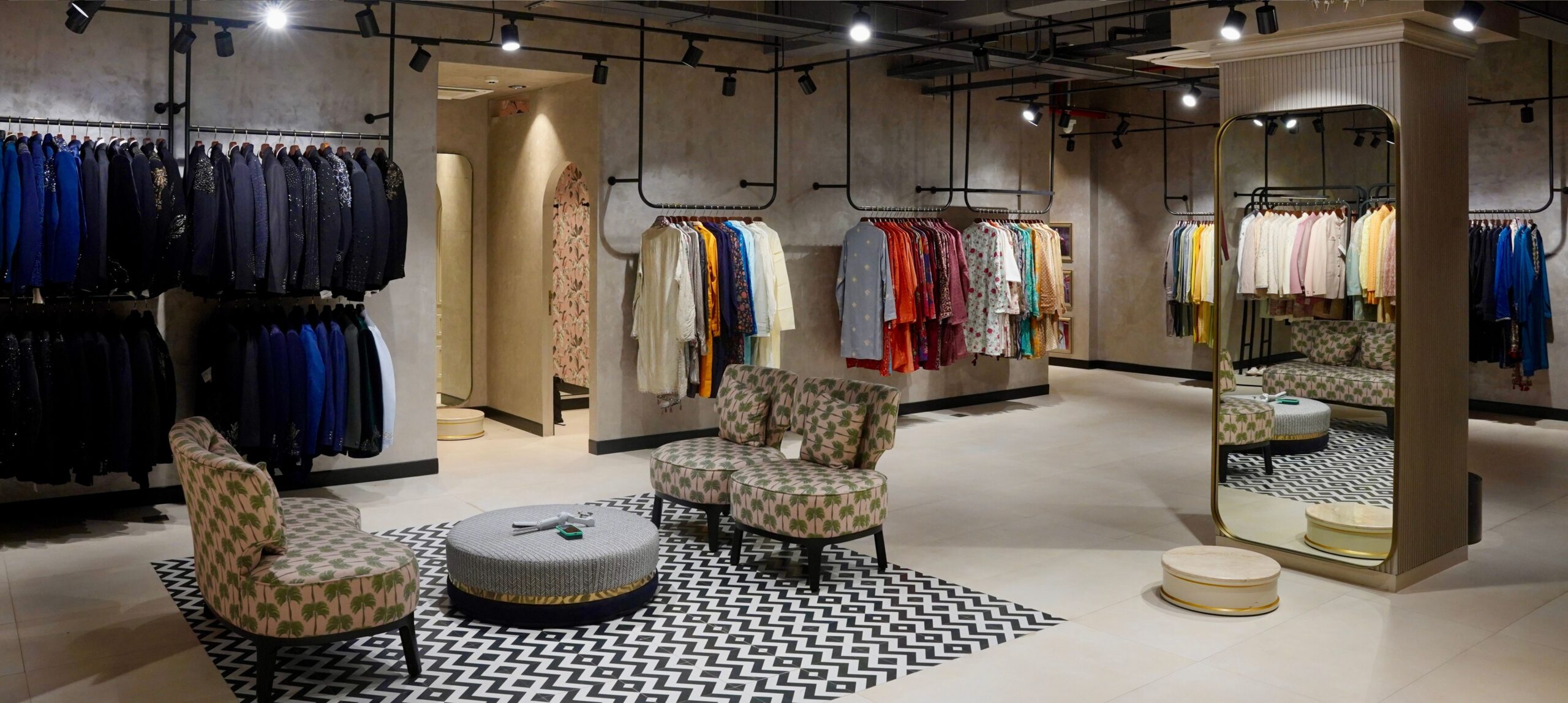
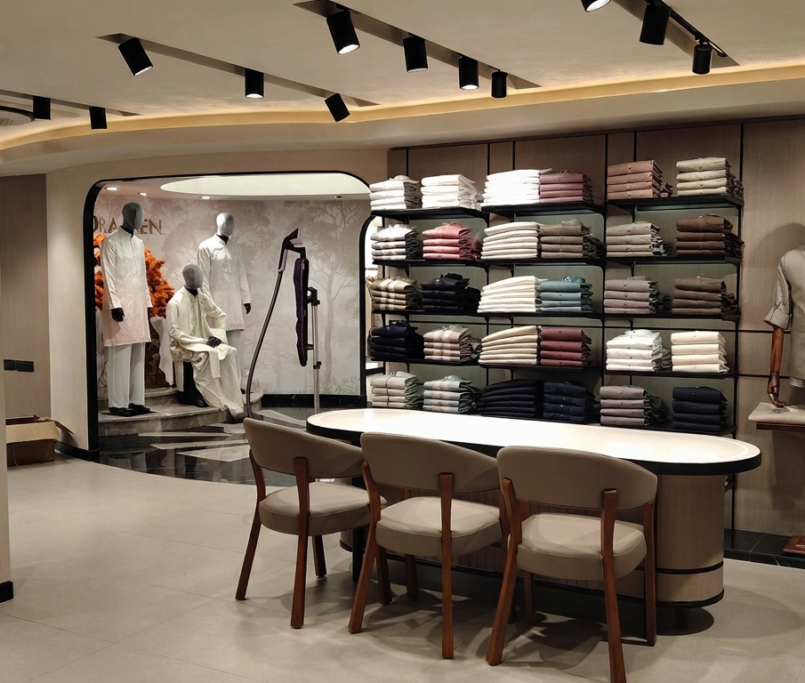
A fashion store can carry the right product at the right price and still underperform. The reason, more often than retailers expect, is spatial. How a customer moves through the space, what they encounter first, where they slow down, these are design decisions, not merchandising ones. Apparel showroom interior design is where those decisions get made, and getting them wrong costs more than it appears on a sales report.
Here is what high-converting fashion retail environments actually do differently.
Conversion Starts With the Floor Plan
Most fashion businesses treat conversion as a product problem. Sometimes a pricing problem. Occasionally a marketing one. The spatial dimension gets addressed last, if at all.
But walk through a store that converts consistently well and the evidence is on the floor. Customers enter and orient quickly. They move without hesitation. They pause where the layout intended them to pause. They pick things up, try things on, and stay, rather than moving through efficiently and leaving with nothing.
Retail store layout design built around observed customer behaviour, rather than aesthetic preference, produces that outcome. A few spatial realities that shape whether a layout works or doesn’t:
- Most customers turn right on entry, reliably, across store formats and geographies. Layouts that ignore this waste the highest-value display real estate in the building
- The first two to three metres inside the entrance function as a decompression zone. Customers are still adjusting. Product placed here gets less attention regardless of what it is or how it’s presented
- Wide-open floor plans read as premium but reduce dwell time. Deliberate path-making through fixture placement keeps customers moving through the space rather than reaching the back wall and turning around
- Fitting room placement is a conversion decision. Proximity to high-margin categories and clear sightlines from the floor both affect how frequently customers use them, and usage rates are one of the strongest predictors of purchase
Correct the layout and you resolve a significant share of the conversion problem before a single product decision gets made.
The Brand Registers Before the Product Does
Fashion retail interior design carries a specific burden. Fashion is identity. A customer walking into an apparel showroom is not simply looking for clothes, they are making a rapid, largely unconscious judgement about whether this brand is for them. The interior environment drives that judgement before they have examined a single garment.
Materials, lighting temperature, fixture detailing, ceiling height, these communicate price point, brand personality, and customer demographic in the first few seconds of entry. Misalign those signals and the friction they create cannot be overcome by good product alone.
What coherent brand-to-space alignment looks like in practice:
- Material specification should reflect the brand’s market position, not just the designer’s aesthetic. A premium womenswear label using cheap laminate fixtures is sending a message, an unintended one.
- Lighting temperature affects how garments read on the floor. Warm light flatters most clothing colours and skin tones; cool white creates a clinical register that works for some identities and actively undermines others.
- Compressed ceilings and tight fixture spacing read as mass market regardless of product quality. Spatial generosity communicates price point more reliably than any individual finish.
- Fitting room interiors belong inside the brand environment. Poor lighting and worn fittings in an otherwise well-designed store is a contradiction customers notice, even when they cannot explain why the experience felt off.
Fixtures as a Merchandising Instrument
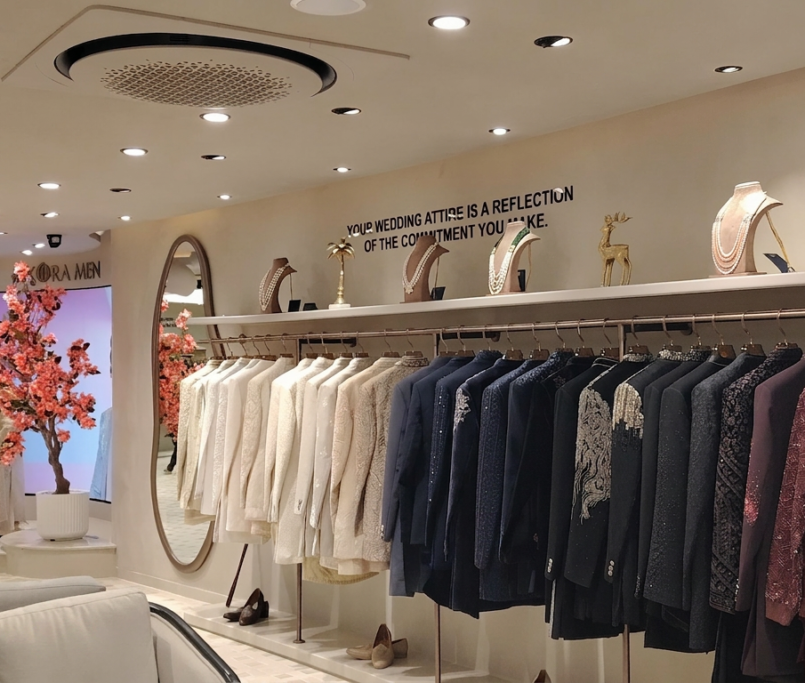
In showroom design and build for apparel, the fixture is not just a product support system. It determines what is visible, how product is grouped, and how much commercial flexibility the floor has as ranges rotate across seasons.
Bespoke fixtures built to specification allow for merchandising precision that standard retail fittings don’t. They hold up under sustained high-contact use in ways off-the-shelf systems rarely manage past twelve months.
Fixture decisions that reward early attention:
- Rail height adjustability, fixed heights lock in a merchandising logic that may not serve every collection
- Finish durability on high-contact surfaces, counter edges, arm rests, and fitting room hooks take disproportionate wear
- Lighting integrated within fixture systems rather than ceiling-only solutions that create shadow at the point of engagement
Start With Behaviour, Not the Mood Board
The best apparel showroom interior design projects open with a customer journey map. Where does a customer enter? What draws them from the window? At what point are they most likely to engage with staff? Where does a typical browsing journey end, and how close is that to the fitting room?
Those answers shape the spatial structure. The mood board comes after, because a beautiful space built on the wrong layout logic will consistently underperform a plainer space with a sound brief.
What Atmosphere Delivers
Atmosphere.work has designed and built apparel retail spaces for fashion brands that treat the store as a commercial asset. Clients include Kalki Fashion, Aza Fashion, and Libas, environments built to hold up under significant footfall while communicating a clear brand identity across every surface and fixture.
In-house manufacturing covers custom joinery, fixtures, and furniture built to specification. The design team works from spatial planning through to installation under one scope.
If your apparel showroom is not doing the commercial work it should, speak to the Atmosphere team.